When people think about improving their homes, they usually picture renovated kitchens, comfortable furniture, or a beautifully landscaped backyard. Water quality rarely makes that list. Yet the water flowing through your pipes plays a role in almost everything you do, from getting ready in the morning to washing dishes after dinner.
For homeowners in Aledo, Texas, investing in appropriate home water treatment and filtration can help address recurring water quality concerns while bringing greater comfort and convenience into everyday life.
The interesting thing about water treatment is that small improvements can have a surprisingly broad impact. You don’t necessarily need an elaborate system, either. What matters is finding a solution that makes sense for your property, your family, and the water you receive.
Looking at Water Quality Beyond Appearance
A glass of perfectly clear water might seem reassuring, but appearance doesn’t tell you everything about what’s inside it. Dissolved minerals, certain chemicals, and other substances may be present without producing visible changes.
On the other hand, cloudy water, unpleasant odors, or unusual tastes can provide useful clues that something deserves investigation.
Effective filtration for household water quality begins with identifying the substances responsible for these concerns through reliable testing or available water quality reports.
Perhaps suspended particles are collecting inside your faucet aerators. Maybe chlorine is affecting the taste of your drinking water. Each situation requires a slightly different approach.
Understanding the problem before purchasing equipment can save both money and frustration.
Finding the Right Filtration Arrangement for Your Property
Walk through the water treatment aisle of a home improvement store, and you’ll quickly discover just how many products are available. Unfortunately, having countless choices doesn’t necessarily make the decision easier.
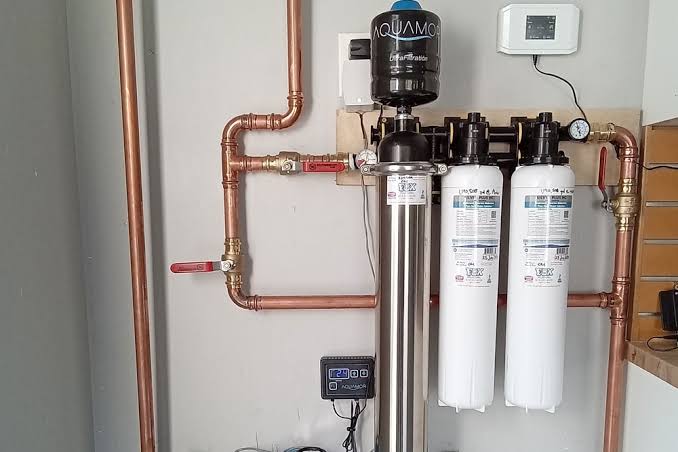
When evaluating whole-home filtration options, consider the specific substances you want to reduce, your household’s water consumption, and the maintenance requirements associated with different technologies.
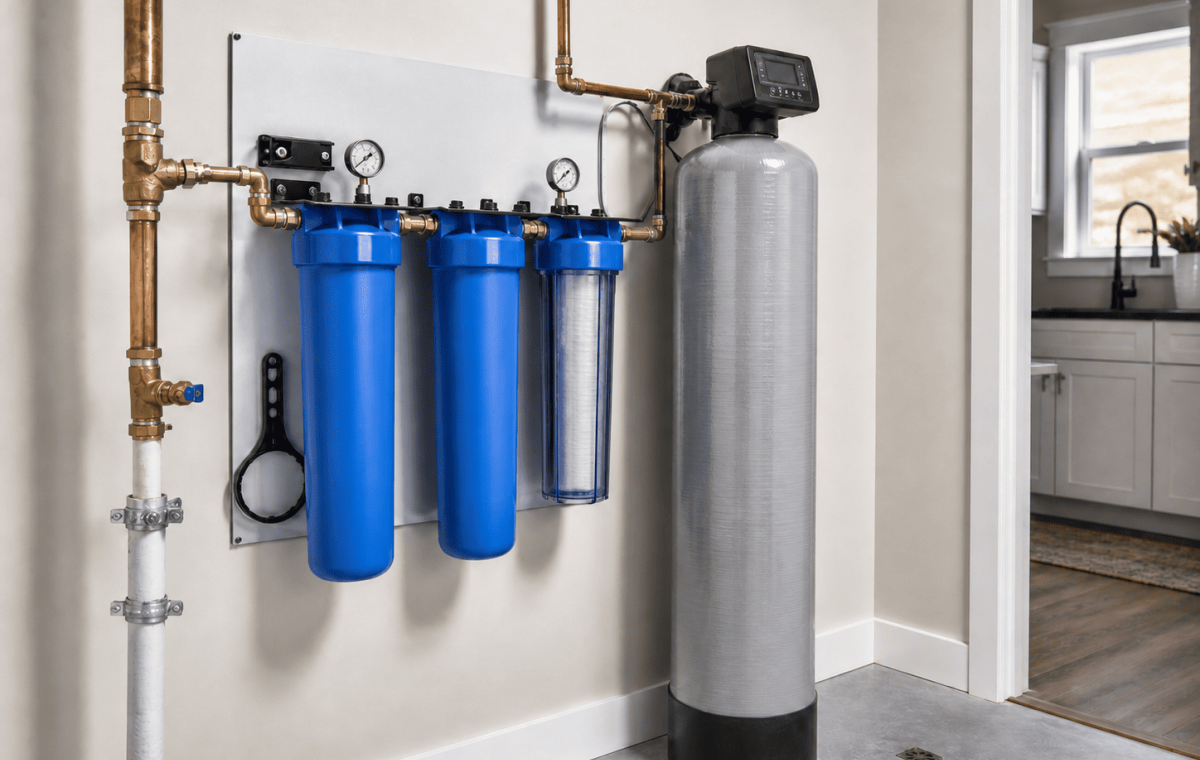
Sediment filters capture suspended particles, while activated carbon can help reduce chlorine and certain unwanted tastes and odors.
Specialized filtration media may address additional concerns when appropriately selected.
A conventional water softener, meanwhile, serves a different purpose by reducing dissolved hardness minerals.
Rather than assuming one device can solve everything, think about how different treatment components might complement one another.
Paying Attention to the Water You Use for Bathing
There’s something disappointing about stepping into a warm shower only to notice an unpleasant odor coming from the water.
Although drinking water receives much of the attention, bathing water contributes significantly to everyday household comfort.
Appropriate carbon filtration may help reduce noticeable chlorine odors, while sediment treatment can limit suspended particles reaching connected shower fixtures.
If hardness is responsible for chalky deposits around the bathroom, softening may offer additional benefits.
These improvements aren’t necessarily dramatic, but they can make familiar routines more pleasant.
After a long day at work or an afternoon spent outdoors in the Texas heat, an enjoyable shower is one of life’s simple comforts.
Reducing Unnecessary Strain on Household Appliances
Your washing machine, dishwasher, and water heater depend on a consistent water supply. Unfortunately, certain water quality concerns can contribute to additional maintenance requirements.
Suspended particles may collect inside appliance screens and valves. Excessive hardness can encourage mineral scale formation inside equipment that heats water.
Appropriate treatment helps manage these issues before they contribute to further accumulation.
Of course, filtration equipment won’t magically restore an appliance that’s already damaged. Regular servicing remains important.
However, addressing incoming water conditions can be a sensible addition to your household maintenance strategy.
Considering the expense of replacing major appliances, preventive care is worth taking seriously.
Balancing Filtration Performance With Household Water Pressure
Imagine trying to rinse shampoo out of your hair while someone downstairs starts the washing machine, causing the shower’s water flow to drop considerably.
It’s frustrating. And it’s precisely why filtration equipment needs to be selected with household demand in mind.
Filter capacity, plumbing dimensions, incoming pressure, and simultaneous water consumption all influence system performance.
An undersized filter or neglected cartridge can contribute to unnecessary flow restrictions.
Before installation, discuss how the proposed equipment will accommodate your family’s busiest routines.
Improving water quality shouldn’t mean compromising water availability whenever several household fixtures are operating together.
Thinking About Maintenance Before Making a Purchase
One detail homeowners sometimes overlook is the ongoing responsibility of maintaining filtration equipment.
Cartridges require replacement, certain treatment media eventually become exhausted, and some systems need periodic backwashing.
When consulting a provider such as Elders Water, ask about annual operating expenses, replacement component availability, servicing requirements, and documented treatment capabilities.
It’s also worth considering whether the installation location offers enough room for convenient maintenance.
A system that’s difficult to access may be more likely to receive delayed attention.
Follow recommended servicing schedules and arrange appropriate follow-up testing when addressing health-related contaminants. Pleasant-tasting, clear water alone cannot establish drinking water safety.
Investing in a More Comfortable Home for the Years Ahead
For families in Aledo, improving household water quality can be a practical investment that supports numerous aspects of everyday living.
Start with reliable information, identify the concerns affecting your property, and choose equipment that offers meaningful benefits without unnecessary complexity.
Over time, the improvements may become part of your normal routine — a more enjoyable shower, fewer suspended particles reaching appliances, or better-tasting water from appropriately treated outlets.
What makes water treatment particularly worthwhile is how frequently your family interacts with the results.
You might not think about the filtration equipment tucked away near your plumbing every day. But the water it treats? That’s something your household depends on from morning until night.
And giving such an essential resource a little extra attention makes perfect sense.