Choosing a water softener shouldn’t involve guesswork. Yet many homeowners purchase treatment equipment based on recommendations from friends, online advertisements, or recurring problems they haven’t properly investigated.
Perhaps your kitchen faucets constantly develop white deposits, your dishwasher leaves cloudy glassware, or your towels feel unusually stiff after washing. These frustrations may indicate excessive water hardness, but understanding its severity is essential before investing in equipment.
For homeowners throughout Northeast Florida, a personalized approach to water treatment can help prevent unnecessary expenses and improve everyday household convenience.
With professional guidance from Tri-County Water Specialists, families can explore suitable treatment options based on measurable water conditions, consumption patterns, and installation requirements.
From initial testing to ongoing maintenance, making informed decisions at every stage can help you get greater value from your water treatment investment.
Start With Professional Testing to Understand Your Water Hardness
Visible mineral deposits can provide useful clues about your household water supply. However, they don’t reveal exactly how much calcium and magnesium your water contains or whether additional treatment concerns exist.
Professional water hardness testing and softener recommendations help homeowners understand their existing water conditions and identify equipment that matches their property’s specific requirements.
Water hardness is commonly expressed in grains per gallon or milligrams per liter as calcium carbonate. These measurements provide valuable information when determining appropriate treatment capacity.
For instance, two households with similar daily water consumption may require different softeners if their incoming hardness levels differ significantly.
Northeast Florida homeowners may receive water from municipal suppliers or rely on private wells. Differences in water sources and groundwater characteristics can influence individual treatment requirements.
Private well water may also contain elevated iron concentrations or other substances that affect equipment selection.
A knowledgeable water treatment professional can explain testing results and discuss whether conventional softening or complementary filtration would be appropriate.
It’s important to remember that hardness testing doesn’t establish overall drinking water safety. Additional laboratory analysis may be necessary when specific contaminants are suspected.
Understanding your water before purchasing equipment allows you to make decisions based on reliable information rather than assumptions.
Prepare Your Property for a Successful Water Softener Installation
Installing a water softener involves more than connecting equipment to existing plumbing. Several practical considerations influence how effectively the system operates and how conveniently it can be maintained.
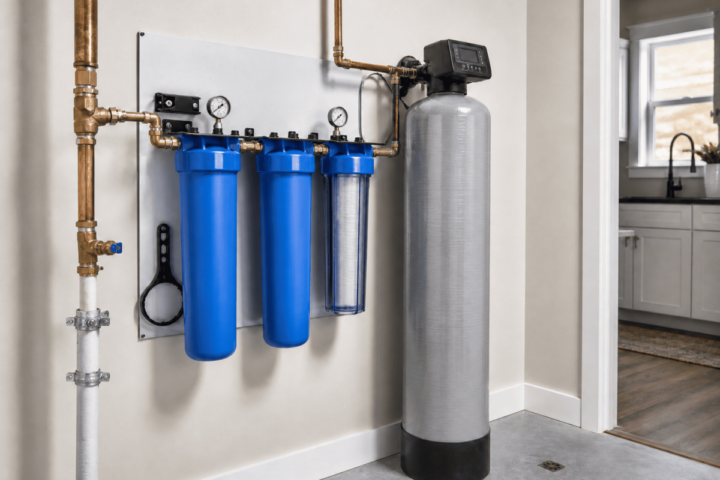
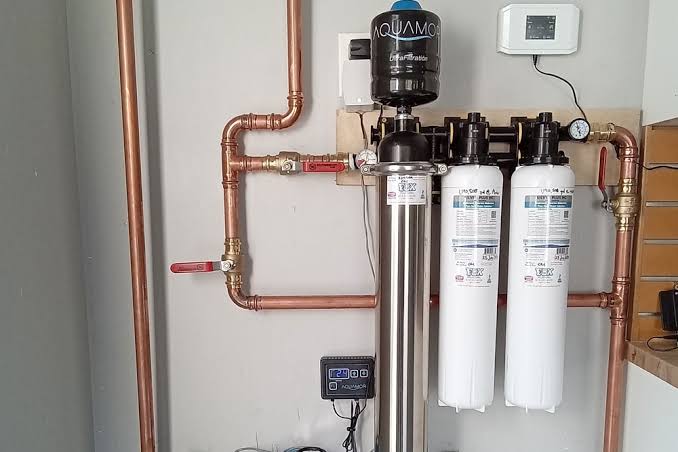
Thoughtful water softener installation planning helps homeowners evaluate equipment placement, plumbing compatibility, drainage requirements, water pressure, and treatment capacity before installation begins.
Conventional whole-house softeners are generally installed near the property’s main water supply. This arrangement allows treated water to reach connected plumbing fixtures and appliances.
However, installation requirements can differ considerably between properties.
Before proceeding, homeowners should consider several important factors:
- Available installation space and accessibility.
- Household water consumption and peak flow requirements.
- Suitable drainage arrangements for regeneration.
- Electrical connections where required.
- Incoming water pressure and plumbing compatibility.
- Convenient access for salt replenishment and servicing.
- Protection against unsuitable environmental conditions.
For example, installing equipment in a cramped location might initially seem convenient, but it could make routine maintenance unnecessarily difficult.
Homeowners should also discuss whether outdoor irrigation outlets or other designated fixtures should bypass the softening system. Treating water that doesn’t require hardness reduction may increase operating expenses unnecessarily.
Professional installation helps ensure that equipment is connected appropriately and configured according to manufacturer specifications and applicable plumbing requirements.
Taking these considerations into account beforehand can make long-term ownership considerably more manageable.
Explore Personalized Solutions for Everyday Hard Water Problems
Hard water affects households in different ways. Some families are primarily concerned about mineral deposits, while others want to improve laundry results or protect expensive water-using appliances.
Modern home water softening solutions allow homeowners to address these concerns through equipment selected according to their water hardness, household size, consumption patterns, and maintenance preferences.
Traditional ion-exchange softeners reduce calcium and magnesium concentrations by exchanging hardness minerals for sodium or potassium ions.
Periodic regeneration restores the resin’s treatment capacity, allowing the system to continue operating effectively.
For households experiencing significant hardness, appropriate softening may offer several practical benefits.
Soap may lather more easily, freshly washed towels may feel softer, and bathroom surfaces may develop fewer hardness-related deposits.
Another important advantage involves protecting household equipment. Reducing excessive hardness helps minimize future scale formation inside water heaters, dishwashers, and other appliances.
However, homeowners should distinguish between conventional softeners and salt-free water conditioners.
Depending on their technology, salt-free conditioners may help manage certain scale-related concerns without actually removing hardness minerals.
Understanding these differences is important when comparing equipment.
The right solution should address your household’s primary concerns while remaining practical to operate and maintain.
Choose the Right Equipment Capacity for Your Household
Imagine starting a laundry cycle while someone takes a shower and another family member washes dishes. Your water treatment equipment needs to accommodate these simultaneous activities.
Selecting a softener with appropriate treatment capacity and service flow is essential for dependable performance.
An undersized system may exhaust its resin capacity prematurely or require unnecessarily frequent regeneration. Conversely, excessively large equipment may increase purchasing expenses without delivering meaningful additional benefits.
Household size, measured hardness, peak demand, and regeneration efficiency should all influence equipment selection.
Ask your water treatment specialist to explain the reasoning behind the recommended system and its anticipated operating requirements.
Understand the Long-Term Costs of Water Softening
The initial purchase price is only one aspect of owning a water softener.
Homeowners should also consider salt consumption, regeneration water usage, routine maintenance, and eventual component replacement.
Although reducing excessive hardness may help minimize certain cleaning and scale-related maintenance expenses, actual savings vary between households.
Comparing long-term operating costs alongside installation expenses provides a clearer picture of overall value.
A reasonably priced system that efficiently handles your household’s requirements may offer greater practical benefits than a more expensive model with unnecessary features.
Maintain Your Water Softener for Consistent Performance
Regular maintenance helps protect your investment and preserve treatment effectiveness.
Monitor salt levels, follow manufacturer servicing recommendations, and periodically test treated water hardness.
If mineral deposits begin returning or regeneration patterns change unexpectedly, arrange a professional inspection.
Keeping simple maintenance records can help you anticipate servicing requirements and identify developing equipment concerns before they become more disruptive.
Take a Confident Step Toward Softer Water in Northeast Florida
Persistent mineral deposits and frustrating cleaning routines shouldn’t become permanent features of your home.
Consider contacting Tri-County Water Specialists to discuss your water hardness, installation requirements, and suitable treatment options.
With reliable testing, thoughtful planning, appropriate equipment selection, and regular maintenance, homeowners can experience the practical advantages of softer water.
Ultimately, a successful water treatment investment begins long before installation. It starts with understanding your water, recognizing your household’s needs, and choosing a solution that delivers meaningful improvements without unnecessary expense.