Water is easy to take for granted when everything is working as it should. In a business, though, water quietly supports a surprising number of daily activities. Employees drink it, kitchens depend on it, bathrooms use it, cleaning crews rely on it, and equipment may need it to operate properly.
When water quality becomes an issue, the effects can show up in small but frustrating ways. Faucets develop mineral deposits. Glassware looks cloudy. Drinking water tastes unusual. Water-using equipment needs more frequent cleaning. None of these problems necessarily feels urgent on its own, but together they can become a real inconvenience.
For that reason, businesses should think about water quality as part of everyday facility management. The right approach isn’t always complicated. Often, it starts with understanding the water and choosing treatment based on the actual needs of the property.
Why Water Quality Matters in the Workplace
A commercial building can use a considerable amount of water every day. The requirements vary depending on the type of business, the number of employees, the building size, and the equipment being used.
In offices, drinking water, restrooms, kitchens, coffee machines, and cleaning activities may account for most everyday use. Employees may notice unpleasant taste or odor quickly, especially if they regularly use water coolers or kitchen faucets.
Hard water can also leave deposits around sinks and fixtures. Over time, these little maintenance tasks add up.
Improving water quality isn’t necessarily about creating a luxury environment. Sometimes it’s simply about making the workplace easier to maintain and more pleasant to use.
Restaurants Have Different Water Demands
Water becomes even more important in food-service environments.
Restaurants use water for food preparation, cooking, dishwashing, cleaning, ice production, handwashing, and beverages. A problem that seems minor in an office can become much more noticeable when water is being used constantly throughout the day.
Hard water may contribute to scale in dishwashers, coffee equipment, water heaters, and other appliances. Taste and odor can also matter when water is used directly in food and drinks.
Because restaurants can experience periods of extremely high demand, treatment equipment must be sized appropriately. A system that works for a small office may not be suitable for a busy restaurant during peak service.
Local Businesses Need Practical Solutions
Not every company has the resources or water demands of a large commercial facility. Small shops, salons, clinics, cafés, studios, and other local businesses still need dependable water, though.
The goal should be practical treatment rather than unnecessary complexity.
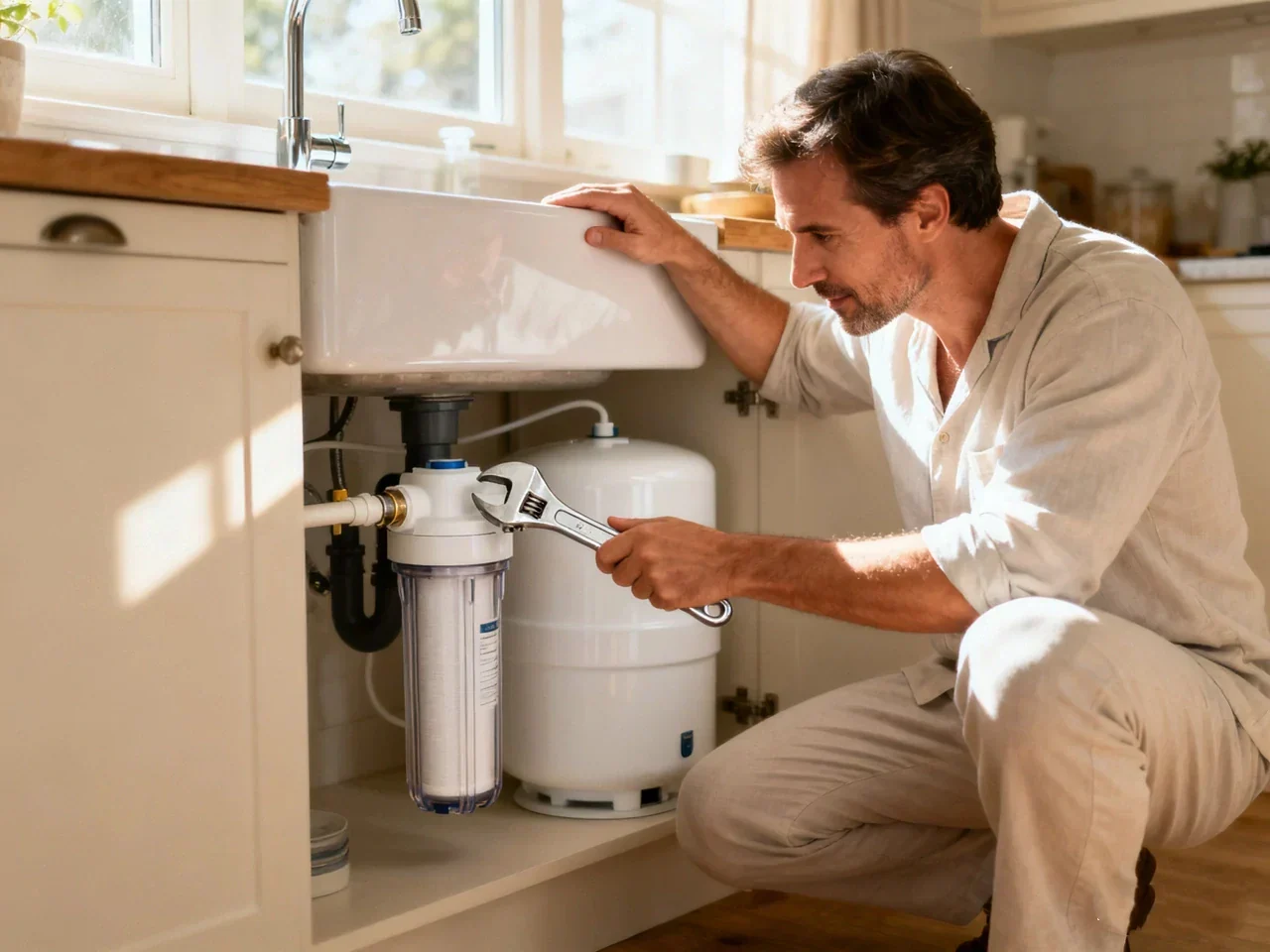
For a small business, a point-of-use drinking-water filter may be enough if the main concern is taste. Another property might need softening because hard water is affecting plumbing and equipment.
The right answer depends on the building and its water, not simply the size of the business.
Start With a Water Test
Before investing in equipment, testing the water is one of the smartest things a business can do.
A water test can provide information about characteristics such as hardness, pH, chlorine, iron, sediment, and other substances depending on the type of analysis.
Testing helps identify the actual issue rather than relying on assumptions.
For example, if a business is experiencing white scale around faucets, hardness may be involved. If employees complain about taste, chlorine or another characteristic might be contributing.
Different problems require different treatment methods, so testing can help narrow down the choices.
Hard Water Can Create Maintenance Headaches
Hard water is common in many areas and is primarily associated with calcium and magnesium.
These minerals can form deposits when water evaporates or is heated. In a commercial environment, that can mean more cleaning around faucets and fixtures and potentially more scale inside water-using equipment.
Water heaters, dishwashers, coffee machines, boilers, and other appliances can all be affected depending on their design and the hardness level.
A properly selected water softener may help reduce hardness-related scale. However, softening isn’t intended to solve every water-quality concern, which is why testing remains important.
Choosing Filtration for the Actual Problem
Water filtration covers many different technologies, and they’re not interchangeable.
Sediment filters are designed to capture particles. Activated carbon is commonly used for certain taste and odor concerns, including chlorine. Other filtration technologies may target specific dissolved substances.
This matters because businesses shouldn’t assume that one filter can handle everything.
If the water problem involves hardness, a softener may be more appropriate. If the concern is drinking-water taste, a point-of-use carbon filter could be enough. If testing identifies a specific contaminant, specialized treatment may be necessary.
The simplest solution that effectively addresses the problem is often the best one.
Consider Peak Water Usage
Commercial water demand isn’t always consistent.
A restaurant may use enormous amounts of water during lunch and dinner. A salon may have busy periods throughout the day. An office may experience heavier usage during working hours.
Treatment systems should be sized with these patterns in mind.
Flow rate is particularly important. If several faucets or appliances are operating at once, the system needs to provide adequate treated water without becoming a bottleneck.
Professional sizing can help avoid both extremes: equipment that is too small to keep up and equipment that’s unnecessarily oversized.
Protecting Commercial Equipment
Commercial equipment isn’t cheap, and water quality can sometimes influence how well it performs.
Scale, sediment, and other water characteristics may increase maintenance requirements for certain machines. Treating the water appropriately can help manage specific issues and may support better equipment performance.
Still, water treatment isn’t a replacement for regular maintenance.
Businesses should continue following manufacturer recommendations, cleaning equipment, replacing components, and scheduling inspections when needed.
Think of water treatment as one layer of protection rather than the entire maintenance plan.
Drinking Water and Employee Comfort
Businesses also need to consider the people using the building.
Clean, pleasant-tasting drinking water is a simple convenience that employees often appreciate. Providing filtered water can encourage people to drink more water during the workday and reduce reliance on disposable bottled beverages.
In customer-facing businesses, water quality can also influence the overall experience.
A glass of water at a restaurant, a waiting-room drinking station, or a hotel guest’s bathroom may seem like a small detail. But small details are often what people remember.
Maintenance Should Be Planned
Installing treatment equipment is only the beginning.
Filters need replacement. Softener systems may require salt. Treatment media can eventually become exhausted. Components may need cleaning or servicing.
Because businesses are busy, maintenance can easily slip through the cracks.
Create a schedule and keep records of filter changes, water testing, service visits, and equipment inspections. Assign responsibility to a specific person or team.
A good maintenance routine protects the equipment and helps ensure the treatment system continues doing what it was purchased to do.
Look Beyond the Initial Price
The cheapest system isn’t always the most economical option.
When comparing commercial water treatment equipment, consider installation, replacement filters, maintenance, operating costs, warranty coverage, and expected lifespan.
A system that costs slightly more upfront may prove more practical if it is reliable and easy to maintain. On the other hand, buying sophisticated equipment that the business doesn’t actually need can waste money.
Look at the full picture.
Better Water Supports Better Business
Water treatment may not be the most exciting part of running a company, but it can have a surprisingly useful role.
Start with testing. Understand the water conditions. Think about how the business uses water and when demand is highest. Then choose treatment that addresses the specific concern.
Whether you’re managing a small workplace, a busy food-service operation, or a larger commercial property, the principle is the same: don’t treat blindly.
The best water solution is one that fits the building, protects important equipment, supports everyday operations, and doesn’t create unnecessary maintenance work.
When everything is working quietly in the background, nobody has to think about it—and that’s usually a sign that you’ve made the right choice.