
Let’s be honest — we don’t think much about our blood vessels. Not until they start making themselves known, either by aching, swelling, or simply refusing to do their job. Legs start to feel heavy, feet go numb, and walking a block suddenly feels like climbing a mountain. At that point, something invisible becomes impossible to ignore.
When your veins and arteries stop cooperating, the next steps often sound scary. Surgery? For blood flow? Suddenly you’re thrust into a world of terms like “vascular,” “chronic venous insufficiency,” and “claudication.” But before panic sets in, let’s take a deep breath and talk about what’s actually going on — and how treatment today is smarter, safer, and more manageable than ever.
This is a human look at varicose veins surgery and peripheral artery disease surgery — what they are, why they matter, and what recovery really feels like.
The Uncomfortable Truth About Varicose Veins
They’re not just a cosmetic thing. Sure, varicose veins look like twisted ropes under your skin, but the problem goes deeper than aesthetics. When veins lose their elasticity or valves stop working properly, blood pools in the legs. That pressure builds, and the result isn’t just bulging veins — it’s aching, throbbing, heaviness, swelling, and sometimes even skin changes or ulcers.
If you’re reading this and thinking, “Ugh, that’s me,” know this: you’re not alone. Millions of people deal with chronic venous insufficiency. And while compression stockings and lifestyle changes can help, sometimes the veins are too damaged to recover on their own. That’s where varicose veins surgery steps in.
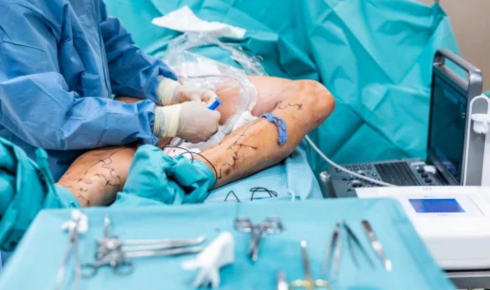
There are several options — laser ablation, radiofrequency, foam sclerotherapy, even traditional vein stripping (though that’s less common these days). Most procedures are outpatient, minimally invasive, and require only a short recovery time. No overnight stays. No huge incisions. Often, just a bandage, some walking, and a few days off your feet.
But the biggest relief? That constant aching and fatigue starts to fade. And with time, so does the visible reminder on your skin.
Arteries Aren’t Always Loud — But They’re Powerful
Now, let’s talk arteries — the stronger, more muscular cousins of veins. They carry blood away from the heart, delivering oxygen to your muscles and organs. But when those pathways get narrowed or blocked (usually by plaque buildup), it’s called peripheral artery disease, or PAD. And it’s sneaky.
You might feel fine at rest, but walking any distance? That’s when the pain starts — in the calves, thighs, or buttocks. It’s often dismissed as “getting older” or “just being out of shape,” which delays diagnosis.
But untreated PAD doesn’t just make walking hard. It can lead to infections, ulcers, and even limb loss. Yes, it’s that serious.
For advanced cases, peripheral artery disease surgery may be needed. This could be angioplasty (using a balloon to widen the artery), placing a stent, or a bypass — rerouting blood around a blockage using a graft. These procedures restore circulation, reduce pain, and in many cases, prevent amputation.
But perhaps the most powerful part? Getting your life back. Being able to walk your dog, go to the store, or just take a stroll around the block without stopping every 10 steps — that’s freedom. And after living with PAD, it feels like a miracle.
What No One Tells You About Recovery
Surgery is often framed as the “fix.” But recovery? That’s where the real work — and sometimes frustration — lives.
After varicose vein procedures, people are often surprised at how quickly they’re back on their feet. You’ll need to wear compression stockings for a bit and avoid heavy lifting, but most folks return to regular life within a week or two. Bruising, swelling, and some mild discomfort are normal, but they fade.
PAD surgeries vary more. If it’s a simple stent or angioplasty, you might be home the same day. If it’s a bypass, expect more downtime. You’ll need to monitor the incision site, take medications, and make some lifestyle changes — because the surgery fixes the symptom, not the root cause.
And here’s the thing — even when the physical healing is going well, emotionally, you might feel a little off. Vulnerable. Slower. Uncertain. That’s normal. Surgery reminds us we’re not invincible. It humbles us. But with the right support, you bounce back stronger.
Prevention Is Always the Better Plan
Let’s not wait for surgery to be the wake-up call. If you have risk factors like diabetes, high blood pressure, high cholesterol, obesity, or a family history of vascular disease — don’t wait for symptoms to shout. Start walking more. Quit smoking. Eat more whole foods and less processed junk. Get your blood pressure and sugar checked regularly.
Because while medicine can do incredible things — lasers, stents, grafts, and beyond — prevention is still the most powerful tool we’ve got.
Final Thoughts: Don’t Be Afraid of the Fix
There’s something comforting about ignoring symptoms. It lets us pretend everything’s fine. But bodies are smarter than that — they speak up. Through swelling. Through pain. Through heaviness and fatigue.
So if your body’s whispering (or shouting), don’t silence it.
See a specialist. Ask about options. Don’t be afraid of terms like varicose veins surgery or peripheral artery disease surgery — these procedures aren’t meant to scare you. They exist to help you keep walking, working, living — fully and without pain.
