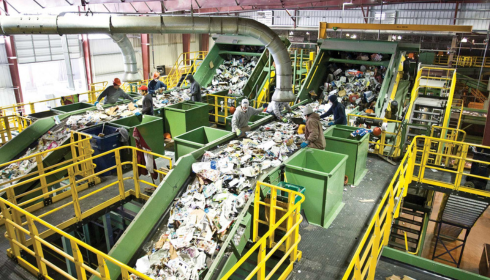
As plastic consumption increases across industries, the challenge of managing plastic waste has become more urgent than ever. A plastic recycling plant in India not only addresses this environmental need but also presents a scalable and profitable business opportunity. With rising demand for recycled plastics across packaging, textiles, construction and consumer goods, the plastic recycling business is gaining strong momentum.
Understanding the Market Opportunity
Globally, plastic waste has reached alarming levels. According to the OECD’s Global Plastic Outlook, the world generated 353 million tonnes of plastic waste in 2019, yet only 9% was recycled. Nearly half ended up in landfills, and a staggering share continues to pollute oceans and ecosystems.
India generates about 9.3 million tonnes of plastic waste every year, ranking among the world’s top producers. However, India also has one of the fastest growing plastic waste recycling markets, supported by:
- Government policies (Swachh Bharat Mission, Plastic Waste Management Rules 2016, EPR compliance)
- Increasing environmental awareness
- Technological advancements in recycling
The plastic waste recycling market in India grew from 8.7 million tonnes in FY23 to 9.71 million tonnes in FY24, and is projected to reach 18-19 million tonnes by 2030. This signals sustained growth potential for entrepreneurs and industries exploring the plastic recycling business ecosystem.
How Does a Plastic Recycling Plant Operate?
To set up a plastic recycling plant, understanding the process is crucial:
- Collection and Sorting
Plastic waste is gathered from households, industries, recycling bins, landfills, and scrap dealers. It is then sorted by plastic type (PP, PE, PET, PVC). - Cleaning and Shredding
The plastic is washed to remove labels, adhesives, and dirt. Clean plastics are then shredded into flakes for easier processing. - Melting and Processing
The flakes are melted and filtered to remove any remaining impurities. Depending on the plant type, the output can be:- Plastic granules
- Pellets
- Sheets or moulded products
- Production and Packaging
The recycled plastic is packaged and sold to manufacturers in sectors such as packaging, consumer goods, furniture, textiles and automotive components.
Setup Cost of a Plastic Recycling Plant in India
The cost of setting up a plastic recycling plant in India depends on the scale of operations, the type of machinery used, and the level of automation.
For a small or semi-automatic unit, the initial investment typically ranges from ₹10 to ₹15 lakhs, which includes basic infrastructure, machinery, and essential labour and utility setup.
As the scale increases, the investment naturally rises. A medium-sized plant may require ₹20 to ₹50 lakhs, especially if better quality machinery and higher output capacity are required.
Meanwhile, large or fully-automatic recycling plants, which offer faster processing, higher efficiency, and continuous production, can require investments starting from ₹50 lakhs and going up to ₹1.5 crore or more.
Key Cost Components:
- Land and infrastructure
- Shredders, washers, extruders, pelletizers
- Labour and utilities
- Pollution control systems
- Licensing, EPR compliance, safety mechanisms
Profit Margin in Plastic Recycling
Profitability depends on:
- Waste sourcing efficiency
- Scale of operations
- Demand for recycled plastic granules
While the initial phase may require time to recover investment, the profitability of a plastic recycling business improves steadily as production stabilizes and scales up.
Most plastic recycling business operations in India operate at a profit margin ranging from 20% to 60%, depending on efficiency and market pricing.
On average, a recycling plant can earn up to ₹60,000 in profit per tonne of recycled plastic processed and sold.
Profitability can improve further when the business moves beyond selling recycled pellets and begins manufacturing value-added products such as plastic bags, containers, sheets, and utility items. These value-added goods not only command higher margins but also expand the customer base to retail and packaging markets, significantly boosting overall revenue potential.
Why Plastic Recycling is the Future
- Reduces landfill and ocean pollution
- Cuts carbon emissions vs. virgin plastic production
- Supports India’s Circular Economy Action Plan
- Aligns with corporate ESG mandates
- Generates employment and local supply chain development
As India scales its recycling infrastructure, leading recycling companies in India are shaping best practices for quality, traceability and environmental responsibility. Jain Metal Group, one of the country’s most established names in large-scale metal recycling, is now extending its expertise towards integrated multi-material recycling solutions, including plastic waste recycling. With decades of operational excellence and a circular economy-driven approach, the Group is contributing towards building a cleaner, resource-secure future for India.